No. A typical under-sink RO system treats the water sent to its dedicated faucet. Whole-home filtration or softening serves a different purpose and may be considered separately.
Reverse osmosis drinking water · Haverhill, Massachusetts
Reverse osmosis drinking water at your kitchen sink
A reverse-osmosis, or RO, system is a dedicated drinking-water treatment installed under the sink. It sends treated water to its own small tap for drinking, cooking, coffee, and ice. That focused setup is different from a whole-home system that treats water as it enters the house.
Request an RO consultationPoint of use · drinking · cooking · coffee · ice
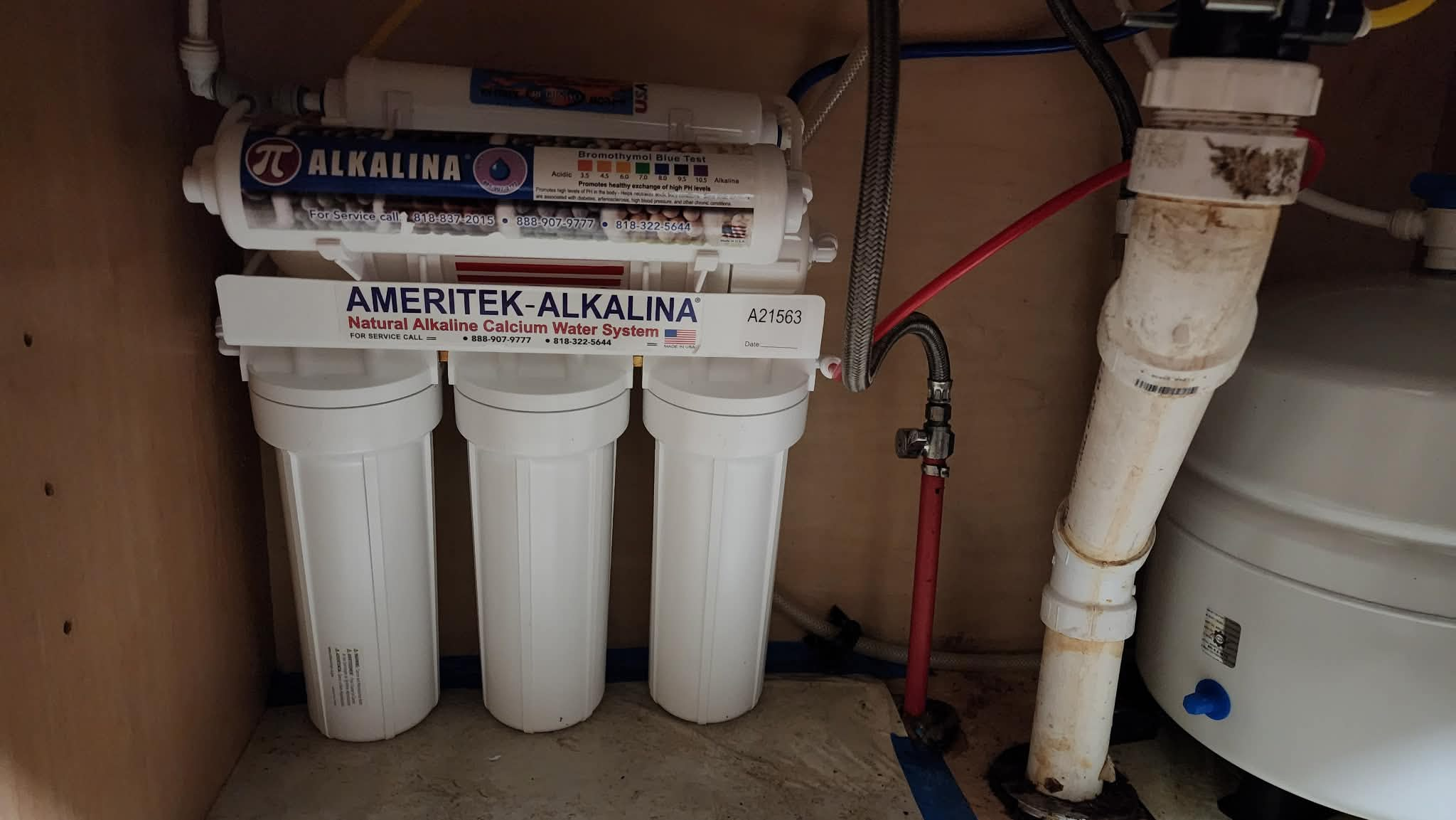
When this may be a fit
A focused setup for the water you drink.
- Your main goal is the taste and quality of water you drink or cook with.
- You want a dedicated tap instead of treating every shower, toilet, and hose bib.
- You are comparing an RO membrane and filters based on an exact product's documented claims.
- You can keep up with cartridge changes, membrane care, and the space needed under the sink.
How the drinking-water stages work
Four stages, one small point of use.
- 01
Sediment protection
The first filter catches grit and particles that could otherwise reach later stages. The exact rating and replacement interval belong to the model's instructions.
- 02
Carbon filtration
Activated carbon can be used for chlorine taste and odor and to protect the RO membrane. Carbon does not automatically mean the system is certified to reduce every chemical or contaminant.
- 03
The RO membrane
Water is pushed through a very fine membrane. Some water goes to the drain as part of the process, while treated water collects in a storage tank or travels to the faucet, depending on the design.
- 04
Final polish and the dedicated tap
A final filter may polish taste before water reaches the separate faucet. The system only treats the water routed through it; it does not change the water at the shower or other household fixtures.
Selection, installation, and care
The useful details come after the choice.
- Confirm the exact RO model, membrane type, stages, and independently documented reduction claims. A generic RO label is not a guarantee about a particular substance.
- The installer checks cabinet space, drain connection, cold-water feed, shutoff access, air gap or drain saddle requirements, and the location of the drinking faucet.
- Replace prefilters, postfilter, and membrane on the model's schedule or when testing and flow indicate service is needed. Old carbon can stop protecting the membrane, and an old membrane can change performance.
- Use the treated tap for drinking and cooking as planned. If the water sits unused for a long period, follow the manufacturer's flushing instructions.
Before you choose
Treat the tap you actually use.
The right question is what this model is documented to do, under which conditions, and what care it needs.
Read the water guidesQuestions about reverse osmosis
A useful next step
Talk through the water you drink
Tell us what you want to change at the kitchen sink. We can compare an RO setup with your current routine and explain the care it needs.