Usually no. Hardness comes from dissolved minerals such as calcium and magnesium. A softener is designed for that mineral problem; a filter may address taste, odor, sediment, or another specific concern instead.
Whole-home water filtration · Haverhill, Massachusetts
Real installWhole-home water filtration for your Haverhill home
Whole-home filtration treats water at the point where it enters your house, before it travels to showers, sinks, laundry, and appliances. It can be a practical fit when the same taste, odor, sediment, or other documented water concern shows up at more than one tap.
Request a water consultation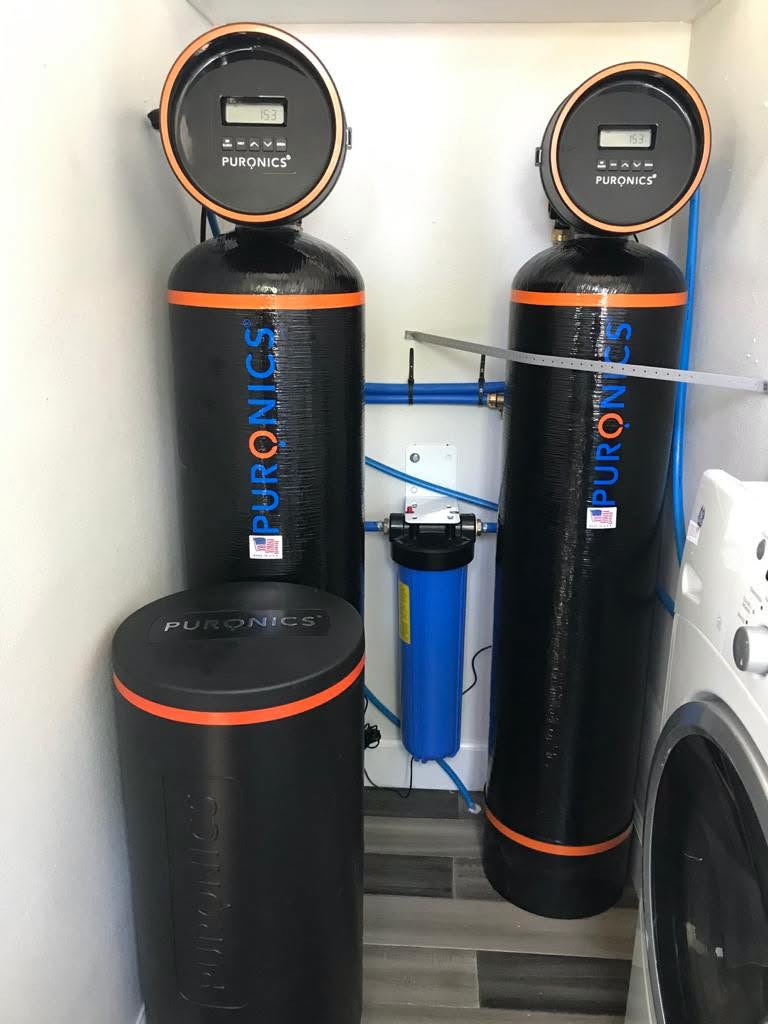
01Entry point → whole home
When this may be a fit
Look for the signs that match your home.
- You notice a chlorine or chloramine taste or odor throughout the home.
- Sediment, rust-colored particles, or a private-well concern shows up at several fixtures.
- You want treatment at the entry point instead of carrying filtered water from one room to another.
- You are willing to match the filter media to a tested concern rather than choose equipment by appearance alone.
How whole-home filtration works
A clear path from the main line to every tap.
- 01
Start with the water and the source
We ask what you notice, whether the home uses city water or a well, and whether the concern changes with the season. A city report can provide context, but it is not a test of your faucet. A home or well test may be appropriate before equipment is selected.
- 02
Choose media for a specific job
Filter media is the material inside the tank. Depending on the exact model, it may be selected for taste and odor, sediment, or another documented purpose. A media label or a familiar brand name is not proof that the system reduces every contaminant. We review the exact product information with you.
- 03
Install at the entry point
The tank is placed on the incoming water line, usually near the main shutoff, water heater, or utility equipment. The plan accounts for a bypass, drain, power when required, floor space, and room to remove or service the tank later.
- 04
Let the control handle its cycle
Many systems use a control valve to start a cleaning or regeneration cycle. The schedule and water use depend on the model and household demand. We show you the controls and the steps that matter for your home.
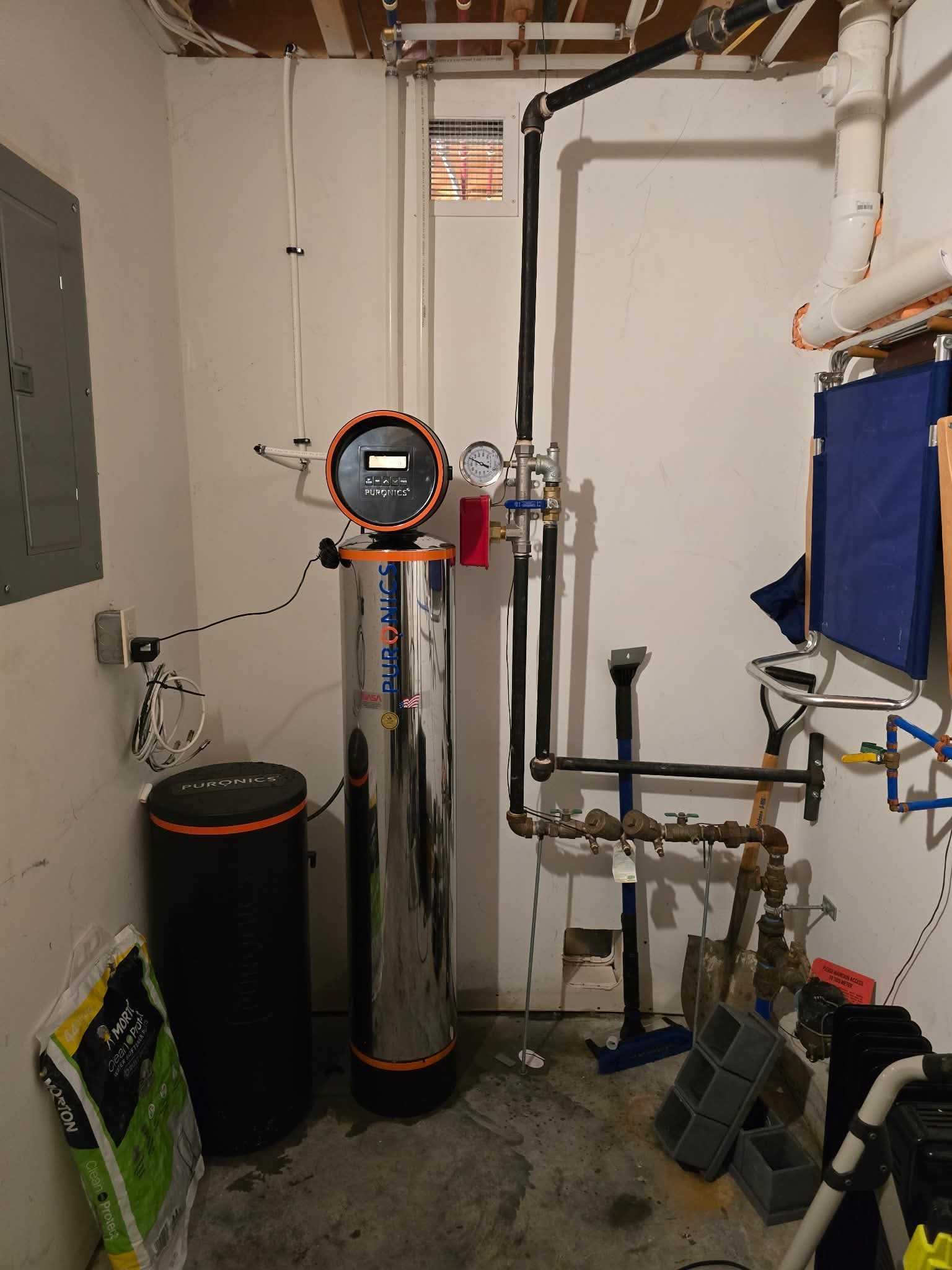
Install note / plumbing context
The main line is where the plan starts.
A real utility room decides the layout: where the incoming line runs, where a bypass and drain can go, whether power is nearby, and how much clearance is left for service. We look at your space before choosing equipment.
Selection, installation, and care
The useful details come after the choice.
- Ask which exact model and media are being proposed, what the media is intended to reduce, and where the supporting performance information comes from.
- Keep the area around the equipment clear. A bypass and shutoff should remain easy to reach in an emergency or during service.
- Follow the model's schedule for backwashing, media replacement, cartridges, or professional service. A filter that is overdue is not the same as a maintained filter.
- Remember that filtration and softening are different jobs. A filter does not automatically remove hardness minerals, and a softener is not a universal contaminant filter.
Before you choose
Ask for the exact model information.
The right question is what this model is documented to do, under which conditions, and what care it needs.
Read the water guidesQuestions about whole-home filtration
A useful next step
Start with what you notice
Tell us where the concern appears and what your home uses for water. We can help you sort out whether whole-home filtration is the right starting point.