Hardness is primarily a mineral and household-use concern, not a synonym for contamination. A hardness reading cannot answer every water-safety question, so other concerns may need separate testing.
Water softening · Haverhill, Massachusetts
Water softening for hard-water scale and spots
Hard water contains dissolved minerals, mainly calcium and magnesium. Those minerals are not the same thing as a contaminant. A water softener is designed to lower hardness so you may see less scale, fewer spots, and better soap performance around your Haverhill home.
Ask about water softening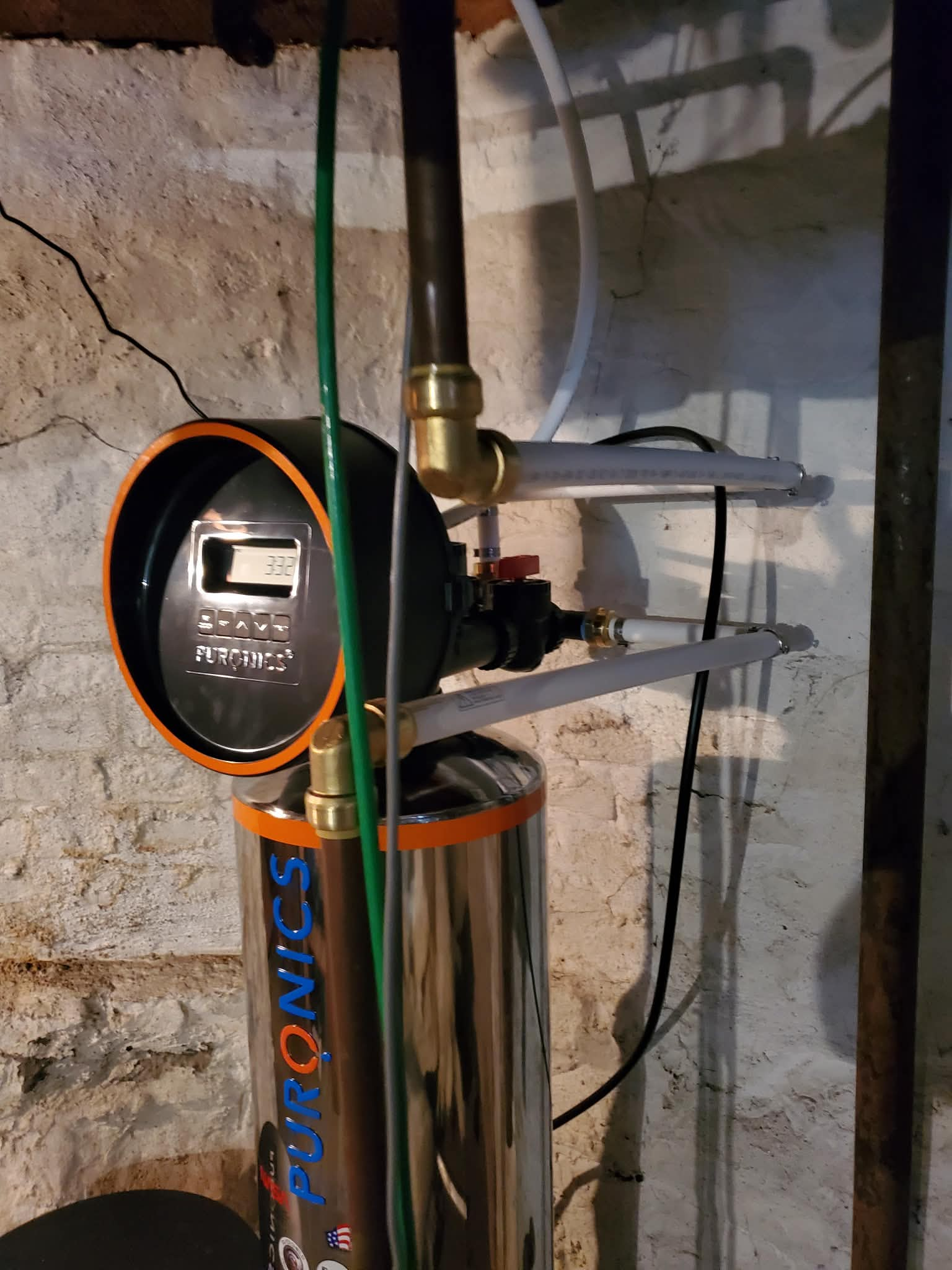
Diagnostic view
When this may be a fit
Read the signs before choosing equipment.
- White scale collects on faucets, shower doors, or the heating elements of an appliance.
- Glasses dry with spots, or soap and shampoo do not lather the way you expect.
- Laundry feels stiff, or you use extra cleaner while still seeing a film.
- A water test or report points to hardness and your goal is mineral control—not a general contaminant claim.
How a conventional softener works
The mechanics matter: measure, exchange, regenerate.
- 01
Hardness is measured first
We identify whether hardness is actually the problem and consider flow rate, household size, source, and plumbing. Hardness is a water chemistry issue. It does not tell us whether the water also contains bacteria, PFAS, metals, or another contaminant.
- 02
Ion exchange does the work
Inside the softener tank are resin beads. As water passes through, calcium and magnesium trade places with sodium or potassium held on the resin. That exchange lowers hardness in the treated water. It is not the same process as carbon filtration or reverse osmosis.
- 03
The resin is regenerated
Over time, the resin needs to be recharged. A brine solution made with salt or potassium chloride carries the hardness minerals away during a regeneration cycle. The control valve schedules the cycle based on the model and water use.
- 04
The home receives softened water
A properly sized system sends treated water through the home's plumbing. A bypass lets you take the equipment out of service when needed. The installation plan includes a dry, accessible location for the tank and brine cabinet.
Salt, potassium, and the no-salt distinction
The useful details come after the choice.
- Check the brine cabinet as part of normal home care and refill it with the material specified for your model. Salt and potassium chloride are not interchangeable without confirming compatibility.
- Keep the brine area dry and make sure the drain and overflow route stay open. The system needs a proper regeneration discharge path.
- A no-salt conditioner may change how scale behaves, but it does not remove calcium and magnesium. Do not buy one expecting the same result as a conventional softener.
- Your exact capacity, salt setting, water use, and service schedule belong in the written plan. A larger tank is not automatically better for every home.
Before you choose
Hardness and contamination are different questions.
A softener works on hardness minerals such as calcium and magnesium. That does not make it a universal filter for unrelated contaminants.
Read the water guidesQuestions about water softening
Pair the right job with the right system
A useful next step
Make sense of the scale first
Send us a note about spots, soap, laundry, or the water report you have. We will help separate hardness from other water questions.